
Gaffer tape looks simple, but the wrong roll can leave residue, reflect stage light, lift at the edges or damage a delicate surface. A useful buying decision starts with the job: temporary cable control, stage marking, photo and video production, classroom setup, warehouse labeling or everyday workshop use.
This guide explains the features that matter and uses the Gaffer Power black 2-inch tape as a practical example. DeosArt has not independently laboratory-tested the product; the product-specific details below summarize the current retailer listing and should be verified before purchase.
Quick buying checklist
- Choose matte cloth tape when reflections matter.
- Match the width to the cable bundle and walking surface.
- Test removable adhesive on delicate floors and painted surfaces.
- Compare price per roll and total case size, not only the headline price.
Gaffer tape versus duct tape
Both products use a cloth-like backing, but they are built for different priorities. Duct tape is normally selected for durable repairs and moisture resistance. Professional gaffer tape is selected for temporary setups where hand tearing, a low-reflection finish and cleaner removal are more important.
For an event, studio or stage, a shiny repair tape can be visually distracting and may leave adhesive behind after lights and foot traffic warm the surface. A matte gaffer tape is usually the better category when the installation must look controlled and be removed after the job.
The five specifications that matter most
Width: Two-inch tape is a versatile standard for securing individual cables and small bundles. Wider tape covers more area but is less economical for small tasks.
Length per roll: Compare usable yards per roll. Frequent users should estimate how many setups one roll normally covers.
Finish: Matte black is common in film, photography and theater because it is less visible under lighting.
Adhesive behavior: Look for a balance between initial grip and clean removal. No removable tape is safe for every surface, so test first.
Backing and tearability: A cloth backing that tears straight by hand speeds up production work and reduces the need for scissors.
When a 24-roll case makes sense
A bulk case can be economical for schools, venues, production companies, installers and organizations that repeatedly manage temporary cable routes. It also makes it easier to keep rolls in separate kits, vehicles and rooms.
A 24-roll order is less suitable for a household that needs one roll for occasional use. Storage conditions matter too: keep unused rolls clean, dry and away from heat so the adhesive remains predictable.
Surface testing and safer installation
Clean dust and moisture from the surface before applying tape. Use the shortest practical contact time on painted, finished or delicate materials. When covering a walking path, press edges firmly and avoid ridges that can become trip points.
For expensive floors, antique finishes, fresh paint or long installations, place a small test strip in an inconspicuous area and remove it after a representative period. Cable ramps or reusable hook-and-loop solutions may be more appropriate for long-term installations.
How the featured Gaffer Power option fits
The featured product is a bulk case of 24 black rolls, each listed at 2 inches by 30 yards. Its positioning makes the most sense for high-volume users rather than a first-time buyer who needs a single roll.
The retailer listing emphasizes a matte cloth surface, hand tearability and temporary hold. Confirm the current package quantity, seller, shipping terms and return policy on the retailer page because listings can change.
Match the product type to your use case
| Use case | What to prioritize | Important note |
|---|---|---|
| Occasional home use | One or two rolls | Avoid overbuying a commercial case |
| Events and studios | Matte 2-inch tape | Balance visibility, grip and removal |
| Large production teams | Bulk multi-roll case | Compare cost per roll and storage |
| Long-term cable routes | Cable ramps or reusable ties | Tape may not be the best permanent solution |
Featured product: Gaffer Power Black Gaffer Tape — 24-Roll Bulk Case
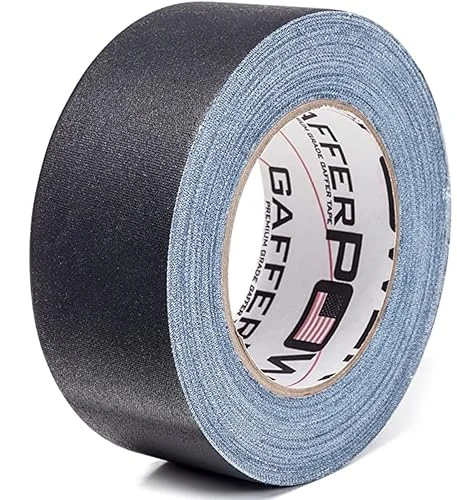
Gaffer Power Black Gaffer Tape — 24-Roll Bulk Case
A bulk case of 24 black 2-inch by 30-yard gaffer-tape rolls designed for production crews, events, studios and high-volume cable management.
Practical strengths and limitations
Why it may fit
- Bulk quantity for frequent use
- Matte black appearance for production environments
- Standard 2-inch width for common cable tasks
Reasons to compare alternatives
- A 24-roll case may be excessive for occasional use
- Surface compatibility still requires testing
- Not intended as a permanent structural repair material
Frequently asked questions
Does gaffer tape leave residue?
Quality gaffer tape is designed for cleaner temporary removal than many repair tapes, but heat, pressure, contact time and surface type can still cause residue. Test first.
Can gaffer tape be used outdoors?
It can be useful for short temporary setups, but weather, sunlight and moisture reduce predictability. For long exposure, use a product specifically rated for the conditions.
Is two-inch gaffer tape wide enough for cables?
Two inches is a practical general-purpose size for individual cables and modest bundles. Wider runs or heavy traffic may need a wider product or a cable protector.