
A large tarp can protect equipment, materials and temporary work areas, but only when its size, strength and tie-down method match the job. A thicker tarp is not automatically safer if it is poorly supported, collects water or becomes a sail in high wind.
This guide explains the buying factors behind heavy polyethylene covers and uses the Xpose Safety 30-by-50-foot, 16-mil tarp as an example. Product specifications should be confirmed on the current retailer listing.
Quick buying checklist
- Measure the finished coverage area and allow for overlap.
- Use thickness as one factor, not the only quality measure.
- Plan tie-down points before unfolding a very large tarp.
- Avoid flat pockets where rainwater or snow can collect.
Cut size versus finished size
Tarp dimensions can refer to the material before hems are folded or to the finished size after manufacturing. The usable cover may therefore be slightly smaller than the name suggests.
Measure the object in three dimensions and account for the drop down each side. Add overlap for fastening, but do not order so much extra material that loose sections whip in the wind.
What mil thickness means
A mil is one-thousandth of an inch. A 16-mil polyethylene tarp is substantially heavier than common lightweight disposable covers, but thickness does not describe weave density, coating quality, seam construction or UV durability.
Choose heavier material for abrasion, long exposure and demanding handling. For a one-day paint project, a heavy industrial tarp may be harder to move than necessary.
Reinforced edges and grommets
Grommets concentrate force into small areas, so edge reinforcement matters. Tie the tarp so the load is distributed across several points rather than pulling one corner extremely tight.
Bungee cords can absorb movement but may recoil dangerously if they fail. Rope, rated straps and purpose-built tarp clips may offer better control depending on the job. Inspect all hardware before use.
Wind, drainage and structure
A tarp exposed to wind creates significant force. Use a supporting structure with a safe slope and secure the perimeter without creating trapped air pockets. Do not attach a large tarp to weak fencing, improvised poles or objects that can overturn.
Rainwater is heavy. Even a shallow sag across a large area can collect substantial weight and cause tearing or structural collapse. Design a clear drainage path and inspect it during storms.
Color, heat and visibility
Dark brown or black covers are visually discreet and can absorb more solar heat. Light colors reflect more light and may keep covered items cooler, while bright colors improve visibility around work areas.
For equipment or materials sensitive to heat, leave ventilation and follow the manufacturer’s storage requirements rather than sealing the item under a hot cover.
How the Xpose Safety tarp fits
The featured tarp is listed at 30 by 50 feet with a 16-mil brown polyethylene construction, reinforced edges and metal grommets. It is aimed at large coverage jobs such as construction materials, outdoor storage or temporary project protection.
At this size, handling and safe anchoring are part of the purchase decision. Verify finished dimensions, grommet spacing, total weight and the current warranty before ordering.
Match the product type to your use case
| Use case | What to prioritize | Important note |
|---|---|---|
| Short indoor project | Light or medium tarp | Easy handling may matter most |
| Large outdoor cover | Heavy material and reinforced edges | Plan wind and drainage |
| Frequent job-site use | Repairability and tie-down options | Inspect before every deployment |
| Heat-sensitive storage | Reflective or light-colored cover | Provide ventilation |
Featured product: Xpose Safety 30 × 50 ft 16-Mil Heavy-Duty Tarp
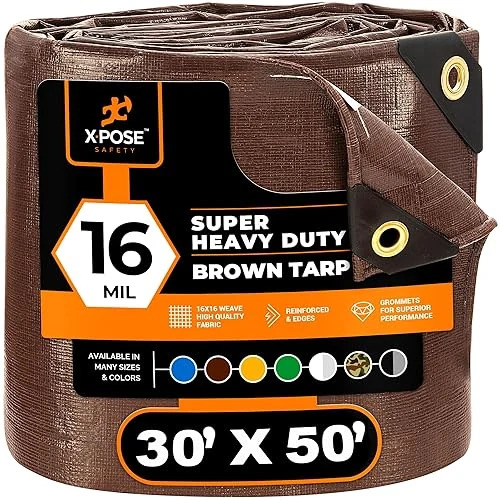
Xpose Safety 30 × 50 ft 16-Mil Heavy-Duty Tarp
A 30-by-50-foot brown polyethylene tarp with a 16-mil construction, reinforced edges and metal grommets for demanding coverage jobs.
Practical strengths and limitations
Why it may fit
- Large coverage area
- Heavy 16-mil listed construction
- Reinforced edges and grommets for tie-downs
Reasons to compare alternatives
- Large size is difficult for one person to handle
- Wind and pooled water can create major loads
- Dark material may increase heat beneath the cover
Frequently asked questions
Is a 16-mil tarp heavy duty?
It is thicker than many general-purpose polyethylene tarps, but durability also depends on weave, coating, seams, reinforcement and how it is installed.
How much larger should a tarp be than the object?
Add enough material to cover the top, sides and fastening area. Measure the full three-dimensional path rather than only the object’s footprint.
Can a tarp be used as a permanent roof?
A general tarp is normally a temporary cover, not a code-compliant roofing system. Long-term shelters require appropriate engineering, materials and local approvals.