
Landscape fabric can reduce weed pressure and separate soil from stone or mulch, but it is not a maintenance-free solution. The right material depends on whether the area is a planting bed, path, greenhouse aisle, nursery row or hardscape base.
This guide explains fabric type, permeability, installation and quantity planning, using the DeWitt Sunbelt five-roll bundle as a featured example.
Quick buying checklist
- Use woven fabric where water and air movement are important.
- Prepare the soil and remove established weeds before installation.
- Overlap seams and secure edges with suitable pins or buried borders.
- Buy bulk quantities only after calculating total area and waste.
Woven versus nonwoven fabric
Woven polypropylene fabric is strong and allows water and air to pass through openings in the weave. It is often used in planting rows, nurseries, greenhouses and under decorative stone.
Nonwoven geotextiles vary widely. Some are designed for drainage and separation beneath hardscape, while lighter products are intended for weed control. Match the product to the application rather than assuming every black fabric is interchangeable.
Permeability and soil health
A weed barrier should not create standing water or block irrigation from reaching roots. Test how water moves through the fabric and plan drip lines before covering it with mulch or stone.
Organic material that accumulates above the fabric can eventually support new weeds. Fabric reduces growth from below but does not prevent seeds from germinating in dust and decomposed mulch on top.
Weight, strength and UV exposure
Heavier woven fabric generally tolerates more foot traffic and installation stress. Exposed fabric also needs UV resistance, although most installations last longer when covered as directed.
Edges, cuts and planting holes are common failure points. Use sharp tools for controlled openings and secure the fabric so wind cannot lift it before the surface layer is installed.
Installation sequence
Remove weeds and sharp debris, grade the soil, install irrigation, unroll the fabric and overlap seams. Secure the perimeter and seams with pins, staples or buried edges appropriate to the soil.
Avoid placing fabric directly over aggressive perennial weeds without control measures. They can exploit seams and planting holes.
Calculate how many rolls you need
Multiply area length by width and add allowance for overlap, curved borders and cutting waste. Long narrow rolls may fit planting rows efficiently but produce more seams in broad spaces.
The featured DeWitt bundle contains five 4-by-300-foot rolls, totaling a very large nominal area. That quantity is aimed at commercial, greenhouse or multi-zone projects rather than a small flower bed.
How the DeWitt Sunbelt bundle fits
The listing describes a 3.2-ounce woven ground cover with planting-alignment stripes and a five-roll bulk configuration. It is positioned for extensive gardens, greenhouse floors, nursery rows and landscaping projects.
Confirm the current roll dimensions, total quantity, UV guidance, permeability, warranty and installation accessories. Pins or staples may need to be purchased separately.
Match the product type to your use case
| Use case | What to prioritize | Important note |
|---|---|---|
| Small flower bed | Single manageable roll | Avoid excessive leftovers |
| Vegetable rows | Permeable woven fabric | Plan planting holes and irrigation |
| Greenhouse aisle | Durable woven ground cover | Consider frequent foot traffic |
| Stone path base | Geotextile suited to separation | Check drainage requirements |
Featured product: DeWitt Sunbelt 4 × 300 ft Weed Barrier — 5 Pack
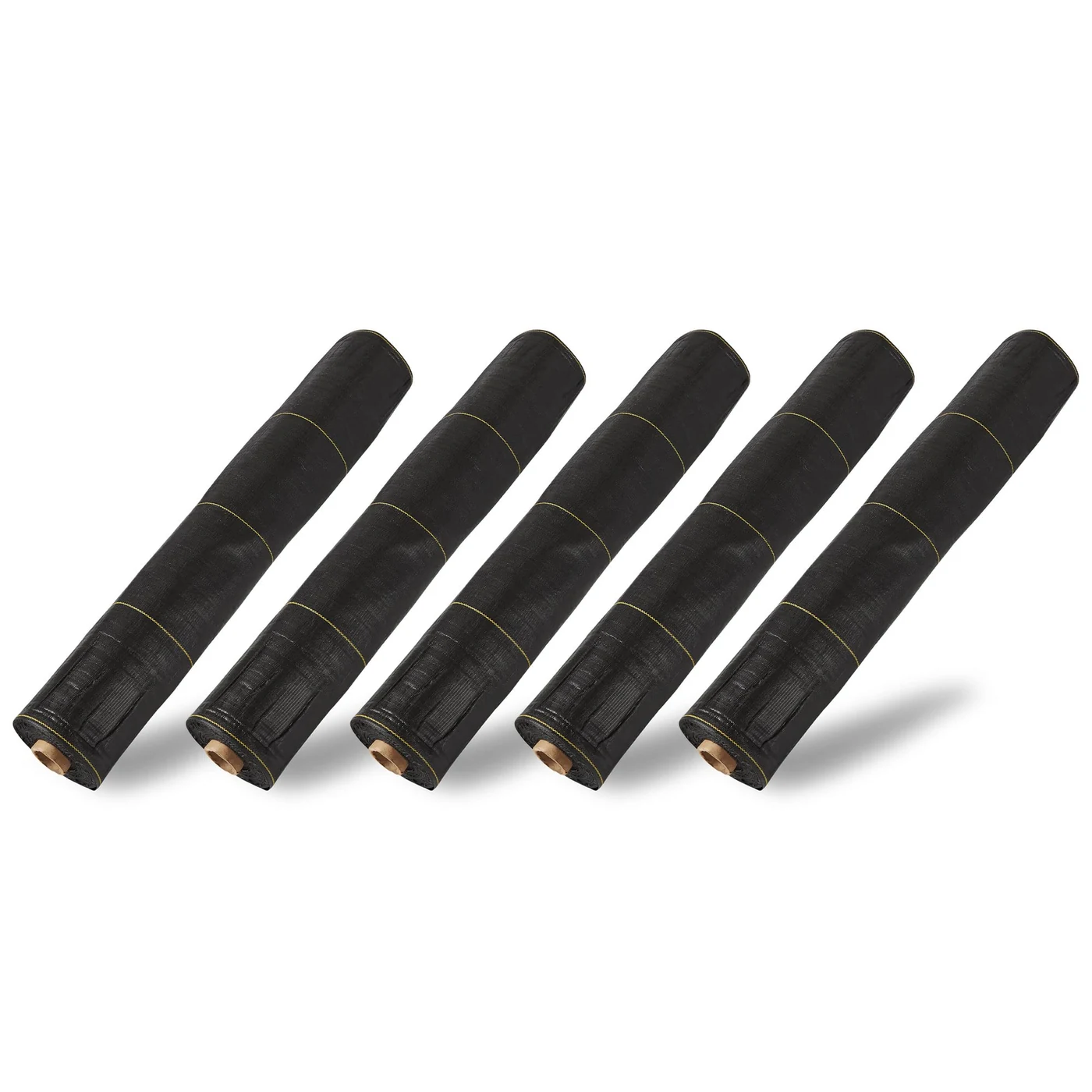
DeWitt Sunbelt 4 × 300 ft Weed Barrier — 5 Pack
Five 4-by-300-foot rolls of 3.2-ounce woven ground cover intended for large gardens, greenhouses, nursery rows and landscaping projects.
Practical strengths and limitations
Why it may fit
- Woven construction permits water and air movement
- Alignment stripes help layout
- Bulk bundle suits extensive projects
Reasons to compare alternatives
- Weeds can still grow in material above the fabric
- Installation requires soil preparation and fastening
- Five large rolls may exceed residential needs
Frequently asked questions
Does landscape fabric stop all weeds?
No. It reduces growth from below, but windblown seeds can germinate in mulch or soil that collects on top.
Should landscape fabric go under mulch?
It can, depending on the bed design and plant type. Organic mulch decomposes over time and may eventually create a new rooting layer above the fabric.
How much should seams overlap?
Follow the manufacturer’s installation guidance and increase overlap in windy areas or where aggressive weeds are present.