
Lump charcoal is valued for high heat, responsive airflow control and a natural wood-charcoal format, but bags can differ in piece size, dust, sparks and consistency. A restaurant or serious outdoor cook also needs to consider storage and delivery logistics, not only cooking performance.
This guide explains the selection factors and uses the Jealous Devil 25-pack bulk listing as a featured example. Fuel behavior varies by cooker and technique, and DeosArt has not independently burn-tested this batch.
Quick buying checklist
- Choose bag quantity based on real monthly consumption.
- Look for a useful mix of medium and large pieces with limited dust.
- Store charcoal dry and away from heat or ignition sources.
- Confirm freight access and total pallet weight before bulk delivery.
Lump charcoal versus briquettes
Lump charcoal consists of carbonized wood pieces with irregular shapes. It lights quickly, responds to airflow changes and can reach high temperatures. Briquettes are manufactured into consistent shapes and generally provide more predictable burn time and arrangement.
Neither format is automatically better. Choose lump for responsiveness and high-heat cooking, or briquettes when uniformity and long repeatable burns are the priority.
Piece size and bag consistency
Large pieces can support longer airflow paths in a kamado or smoker, while smaller pieces fill gaps and ignite quickly. Excess powder can restrict airflow and represents unusable weight.
Transport handling affects breakage, so even a premium product may have variation between bags. For commercial use, consistency across repeated orders matters as much as one strong bag.
Heat, sparks and smoke character
Dense hardwood charcoal can produce strong heat. Some species and batches spark more during lighting. Always light charcoal outdoors in a suitable cooker and use long tools and protective equipment.
Good lump charcoal should not need artificial flavor claims to sell it. Food flavor depends on the base fuel, smoking wood, airflow and combustion quality. Clean-burning charcoal with sufficient oxygen produces a different result from smoldering fuel.
Estimate bulk consumption
Track fuel used per service, event or long cook. Multiply by expected monthly volume and add a reasonable reserve. Buying 25 bags is economical only when the stock will be used before storage becomes a problem.
Commercial kitchens should also account for inventory rotation, dry storage, local fire rules and safe material handling.
Pallet delivery and storage
Confirm the total shipment weight, pallet dimensions, delivery method and whether lift-gate service is included. A residential driveway may not be suitable for a large freight delivery.
Store bags off the ground in a dry, ventilated area away from flames, sparks and heat. Damaged bags should be contained so charcoal dust does not spread through the storage area.
How the Jealous Devil bulk pack fits
The featured listing is a 25-pack of natural hardwood lump charcoal intended for high-volume users such as restaurants, caterers, event cooks and competition teams. The image shows pallet-scale quantity rather than a normal single-bag household order.
Verify current bag weight, total shipment weight, freight terms, delivery access and return conditions. For occasional backyard cooking, a single-bag listing is likely a more practical purchase.
Match the product type to your use case
| Use case | What to prioritize | Important note |
|---|---|---|
| Occasional grilling | Single bag | Learn consumption before buying bulk |
| Kamado cooking | Mixed medium and large pieces | Preserve airflow |
| Restaurant service | Consistent bulk supply | Plan dry storage and freight |
| Long smoking sessions | Stable dense pieces | Compare ash and burn behavior |
Featured product: Jealous Devil Natural Hardwood Lump Charcoal — 25-Pack
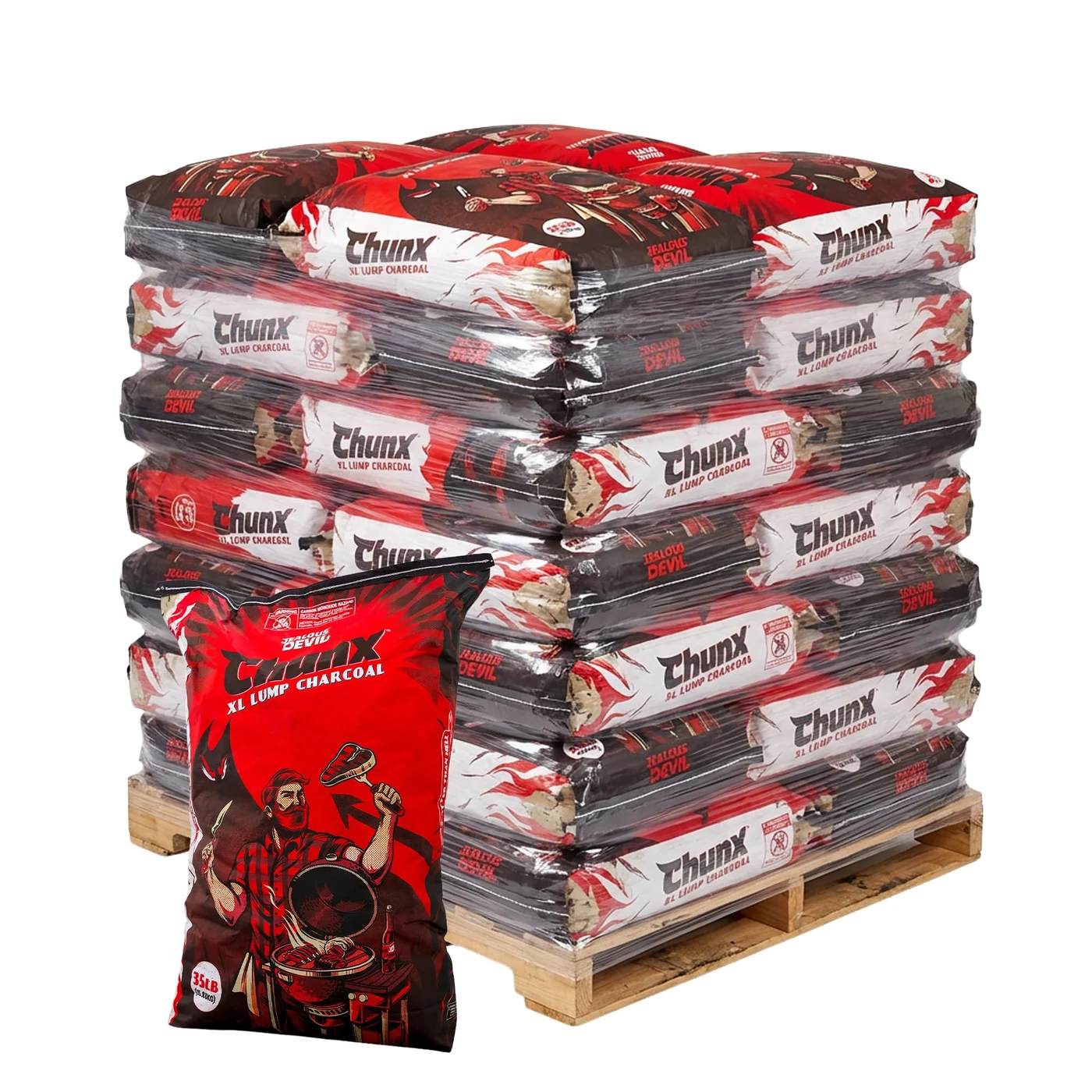
Jealous Devil Natural Hardwood Lump Charcoal — 25-Pack
A bulk 25-pack of natural hardwood lump charcoal intended for restaurants, caterers, events or serious high-volume outdoor cooking.
Practical strengths and limitations
Why it may fit
- Bulk format reduces reorder frequency for high-volume use
- Lump charcoal responds quickly to airflow
- Natural hardwood format suits grills, smokers and kamados
Reasons to compare alternatives
- Very large quantity for a household
- Freight and storage require planning
- Piece size and breakage can vary between bags
Frequently asked questions
Does lump charcoal burn hotter than briquettes?
It can reach high temperatures quickly, but cooker design, airflow and fuel quantity determine actual heat.
How should lump charcoal be stored?
Keep it completely dry, off the ground and away from ignition sources in accordance with local safety requirements.
Is a 25-pack cheaper per bag?
It may be, but compare delivered cost, freight, storage and how quickly you will use the inventory.